In an emergency, the clock starts the moment the call connects. An effective response depends on two things going right — locating the caller and routing the nearest unit to them by the fastest path. Fail either, and help is delayed when seconds matter most.
Where consumer maps fall short
Public-safety agencies rely on mapping to dispatch the closest responder, but consumer-grade apps frequently send them astray: to a highway behind a building with no access, to the wrong side of a waterfront property, or to the street entrance of a gated community when the call came from a clubhouse deep inside. Each wrong turn costs time.
Mapping the last metres
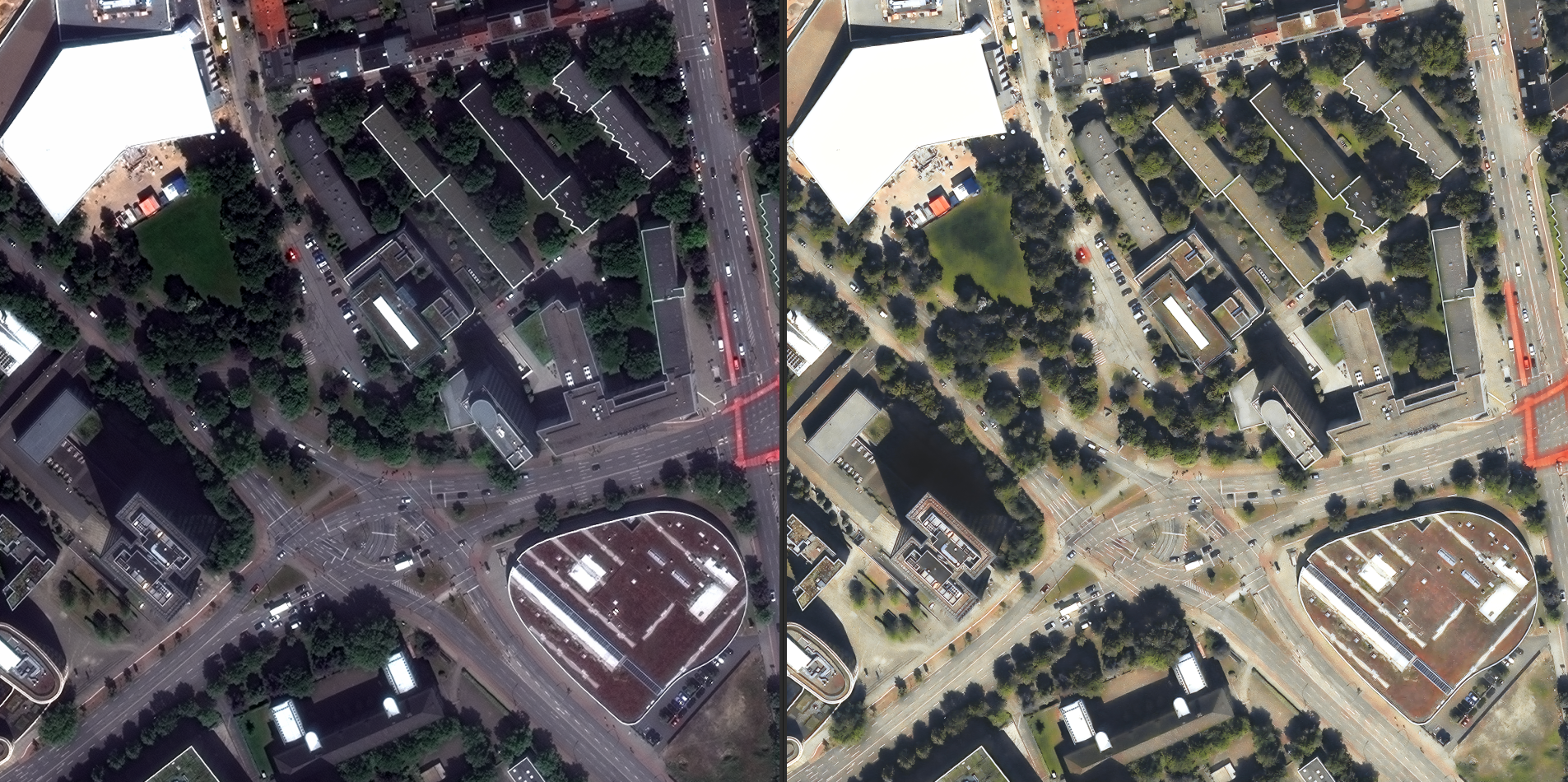
By extracting driveways, parking areas and actual access points from high-resolution imagery, we give dispatch a network that reflects how a property is really reached — not just the nearest public road. With accurate, building-level access data, agencies can identify the nearest available unit and route it to the right entrance, shaving the minutes that change outcomes.