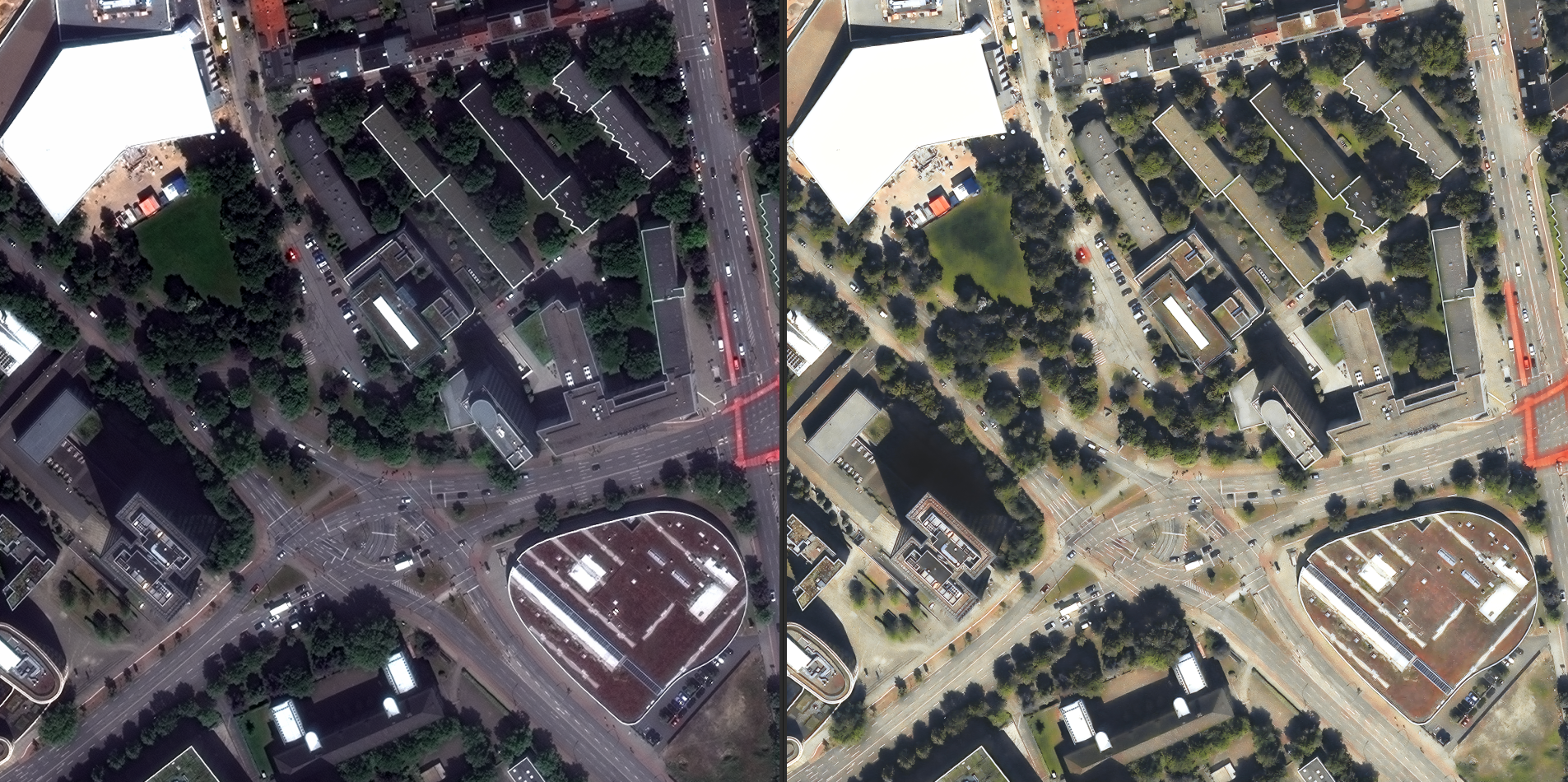
Impervious-surface mapping is the process of producing a geospatial picture of the land that water cannot soak through. Every type of land cover ultimately falls into two buckets — pervious surfaces that let water permeate the soil, and impervious ones (roofs, roads, car parks) that send it running off instead.
Why it matters
That simple split governs flooding, runoff and the cost of managing stormwater. The more impervious a catchment, the more water it sheds during a storm — which is why accurate impervious data sits at the heart of stormwater planning, utility-fee calculation and flood resilience.
From pixels to a usable layer
Producing it well means turning imagery into precise, current vector land cover — buildings, pavements, roads and the green spaces between them — at building-level detail. Our pipeline runs from raw imagery to that finished, attributed layer, so the output is something a municipality can act on rather than another picture to interpret.
This guide walks through what impervious-surface data is, how it is made and where it pays off — the foundation for any serious stormwater or land-management programme.