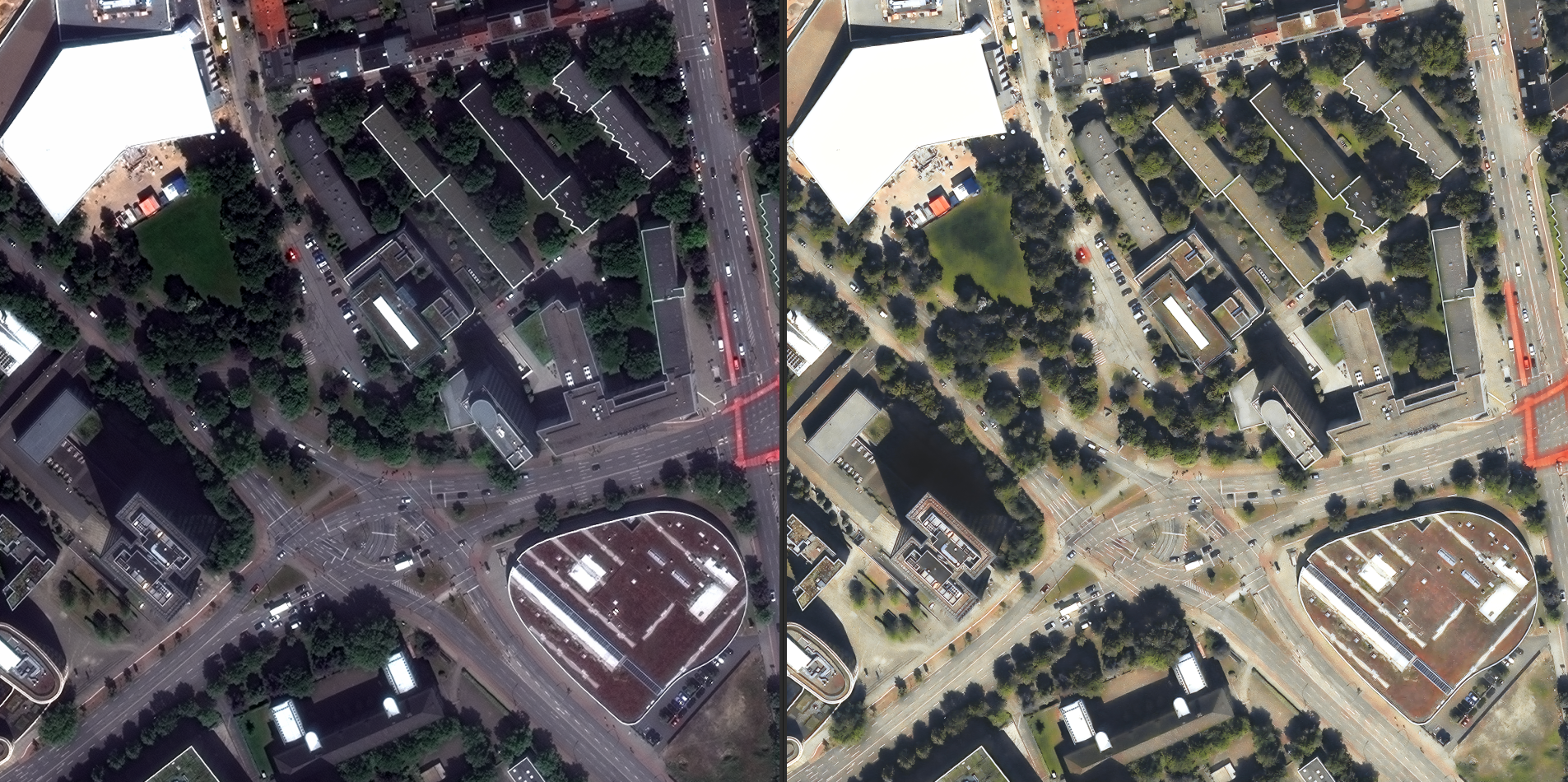
In Bruges, Belgium, we used satellite and panchromatic imagery to detect road-surface damage and classify pavement texture automatically — turning a slow, disruptive manual survey into a repeatable, city-wide analysis.
The challenge
Bruges pairs modern asphalt with historic cobblestone, so the city needed a distress inventory — cracks, patches and seams — broken down by pavement type. Manual inspection was slow, subjective and disruptive to traffic.
Our approach
We fused high-resolution panchromatic detail with multispectral satellite data and ran deep-learning models to detect and geolocate each defect and surface segment. The damage types were cracks (fatigue, transverse, edge or random), patches and construction seams; the surface materials were:
- asphalt
- pavers / cobblestone — traditional stone blocks, common in the historic core
- concrete
Results & benefits
- A city-wide digital map of road damage and surface type for Bruges.
- A clear distinction between asphalt, cobblestone and concrete areas.
- Every defect geolocated, ready for a data-driven maintenance programme.